
Some cars are recognised by their badge. Others can be identified from their shape alone.
The MINI belongs firmly in the second group.
Its circular headlights, short overhangs, upright windscreen and wheels positioned close to the corners make it instantly recognisable. Even as the range has grown and the technology beneath it has changed, the MINI has never been allowed to become just another small car.
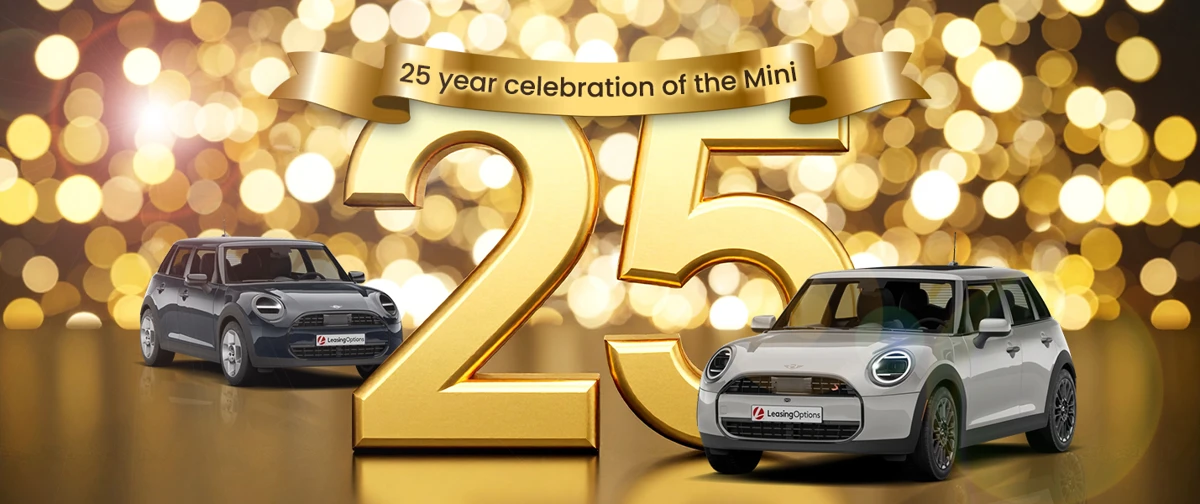
In 2026, the modern MINI celebrates 25 years since production began under BMW Group. It is an important anniversary for a car that faced the difficult task of reimagining one of Britain’s greatest motoring icons.
The original Mini was launched in 1959 and designed by Sir Alec Issigonis. Its transverse engine and front-wheel-drive layout allowed an unusually large amount of passenger space to be fitted inside a very small body.
It became far more than practical transport.
Victories for the Mini Cooper at the Monte Carlo Rally in 1964, 1965 and 1967 gave it genuine motorsport credibility. Its appearances in films, connections with British fashion and popularity among drivers from different backgrounds helped turn it into a cultural icon.
More than 5.3 million classic Minis were produced before manufacturing ended in 2000.
Replacing a car with that level of history was never going to be easy.
BMW Group acquired Rover Group, including Mini, in 1994. When Rover and Land Rover were sold in 2000, BMW retained the MINI brand and the manufacturing facilities at Oxford and Swindon.
The challenge was to create something modern, safer and more sophisticated without losing the character that had made the original Mini special.
Production of the new MINI One and MINI Cooper began at Plant Oxford on 26 April 2001. Both models went on sale in the UK on 7 July that year, giving British drivers their first opportunity to experience the reinvented car.
The new MINI was considerably larger than the classic model, but retained many of its most recognisable design themes.
The headlights remained round, the roof appeared to float above the windows and the wheels were positioned close to the corners of the body. Inside, a large central speedometer provided a clear reference to the dashboard of the original Mini.
It was a clever piece of design because it looked unmistakably like a MINI without attempting to copy the 1959 car.
The way it drove was just as important.
Quick steering, compact proportions and responsive handling gave it an agile character that MINI described as a “go-kart feeling”. The phrase became closely associated with the brand, but behind the marketing was a small car that genuinely felt different from many of its rivals.
The modern MINI also placed much greater emphasis on personalisation.
Contrasting roofs, bonnet stripes, different mirror caps and a wide choice of interior finishes allowed drivers to create a car that felt individual. At launch, British buyers could choose from more than 40 options, three option packages, three alloy-wheel designs and eight exterior colours.
For many customers, choosing the specification became part of the experience.
The initial 2001 range consisted of the MINI One and MINI Cooper, but a more powerful version was already being prepared.
The MINI Cooper S was unveiled at the Tokyo Motor Show in October 2001 before going on sale in the UK on 8 June 2002. Its supercharged 1.6-litre engine produced 163bhp, giving the modern MINI the performance needed to support the famous Cooper name.
John Cooper had recognised the competition potential of the original Mini and played a central role in creating the first Mini Cooper. Continuing to use his name provided an important link between the modern car and the motorsport history of its predecessor.
Demand for the new MINI built quickly. Plant Oxford produced its 100,000th car in May 2002, just 13 months after volume production began.
The range continued to expand.
The modern MINI Convertible arrived in 2004, while the Clubman followed in 2007 with an extended body and distinctive split rear doors.
The Countryman joined the range in 2010 and represented a major departure for the brand. It was larger, offered four conventional passenger doors and became the first MINI available with all-wheel drive.
Some traditionalists questioned whether a vehicle of its size could really be considered a MINI. However, the Countryman allowed the brand to reach families and drivers who needed more passenger and luggage space.
A five-door MINI Hatch followed in 2014, while less conventional models including the Coupe, Roadster, Paceman and Clubvan demonstrated how far the MINI identity could be stretched.
Not every experiment became a permanent part of the range, but they showed that MINI was prepared to take risks rather than rely entirely on the shape of the three-door Hatch.
Some of the most exciting modern MINIs came from John Cooper Works.
JCW models combined more powerful engines with upgraded brakes, firmer suspension and a more purposeful appearance. Limited-production GP versions pushed the idea further by reducing weight and placing a greater emphasis on performance.
The 2020 MINI John Cooper Works GP used a turbocharged 2.0-litre engine producing 306hp and 450Nm. It could accelerate from 0 to 62mph in a claimed 5.2 seconds and reach 164mph, making it the fastest road-approved MINI produced at that time.
Production was limited to 3,000 cars worldwide, with 575 allocated to the UK.
That same year marked another important development as series production of the MINI Electric began at Plant Oxford.
The car retained the familiar three-door shape but replaced its petrol engine with an electric motor and battery. It demonstrated how MINI’s compact dimensions and responsive character could be adapted for electric driving.
By September 2021, MINI had delivered its one-millionth modern car to a UK customer.
The latest MINI family takes the idea considerably further. British customers can now choose from petrol and fully electric models across a range that includes the Cooper, Cooper 5-Door, Cooper Convertible, Aceman and Countryman.
The all-electric Aceman introduced a new crossover positioned between the smaller Cooper and larger Countryman, providing five-door practicality without moving into a full-sized family SUV.
The latest Cooper also features a 24cm circular OLED touchscreen at the centre of its dashboard. It is a modern interpretation of one of the original Mini’s most recognisable interior details, bringing the instruments, navigation, entertainment and many vehicle functions together within one display.
The design is modern, but the connection to earlier MINIs remains clear.
It is important, however, to be accurate about where the current models are produced.
The petrol MINI Cooper 3-Door, Cooper 5-Door and Cooper Convertible are built at Plant Oxford. Their body panels and sub-assemblies are supplied by BMW Group Plant Swindon, while their petrol engines are manufactured at Plant Hams Hall in North Warwickshire.
The current electric MINI Cooper and MINI Aceman are produced in China through Spotlight Automotive, BMW Group’s joint venture with Great Wall Motor.
The petrol and electric versions of the current MINI Countryman are manufactured at BMW Group Plant Leipzig in Germany. The Countryman became the first MINI model to be produced in Germany when manufacturing began there in November 2023.
MINI therefore operates through a global manufacturing network, but Britain continues to play a central role in the brand’s story.
By April 2026, BMW Group had produced 4,671,664 modern MINIs in Britain since production began in 2001.
Plants Oxford and Swindon employed more than 3,000 people and supported production of around 800 MINIs each day, with a car leaving the Oxford production line approximately every 78 seconds. Oxford-built MINIs have been exported to more than 100 countries.
Those figures demonstrate the scale of the achievement, but production numbers only explain part of the modern MINI’s success.
The reinvention worked because BMW Group understood that the original Mini could not simply be recreated. Safety requirements, customer expectations and manufacturing technology had changed too much.
Instead, the modern car concentrated on the qualities drivers remembered.
It remained distinctive, highly personal and enjoyable to drive. It retained the visual confidence of the original while introducing the safety, comfort and technology expected from a contemporary car.
The modern MINI has not remained genuinely mini in every form. The Countryman is now a family SUV and even the latest Cooper is considerably larger than its 1959 predecessor.
However, the brand has achieved something that few revived motoring names manage. It has developed a modern identity that does not depend entirely on nostalgia.
A current MINI is not distinctive simply because the original was famous. Over the past 25 years, the modern car has built its own following, created its own performance models and become a familiar part of British roads in its own right.
The anniversary also highlights the MINI’s continued importance to the UK motor industry.
The Oxford site has manufactured cars since 1913 and produced the original Morris Mini Minor from 1959. Today, it continues to build petrol MINIs for customers around the world, supported by BMW Group manufacturing facilities in Swindon and North Warwickshire.
That connection gives the modern MINI an unusual identity.
It is a British motoring icon developed into a global premium brand under BMW Group ownership, with an important part of its manufacturing story still firmly based in the UK.
Twenty-five years after the first modern MINI left Oxford, what was once a potentially risky reinvention now feels like an established part of the car’s history.
The classic Mini will always be the original. It was a revolutionary small car, a motorsport winner and an unmistakable symbol of its era.
The modern MINI did not replace that legacy. It gave it somewhere new to go.
To explore the petrol and electric models currently available, take a look at the latest MINI lease deals from Leasing Options.


