
Some performance cars are remembered for their speed. Others are remembered for the way they look, sound or feel from behind the wheel.
The Volkswagen Golf GTI has managed to build its reputation around all of those things while remaining practical enough to use every day.
That balance is what has made it so special.
The first Golf GTI reached production in 1976, bringing genuine performance to a compact family hatchback. It was quick, light and entertaining, but it also had space for passengers, a useful boot and none of the compromises normally associated with owning a sports car.
It helped establish the formula that became known as the hot hatch and, 50 years later, manufacturers are still trying to perfect it.
The GTI story began with a small group of Volkswagen employees working on an unofficial project known as the Sport Golf. Their idea was relatively simple but surprisingly bold. Take the practical, front-wheel-drive Golf and give it more power, sharper handling and a distinctive sporting character.
Volkswagen revealed the Golf GTI at the Frankfurt Motor Show in September 1975 before launching the production model in Germany in June 1976.
Powered by a 1.6-litre, fuel-injected engine producing 110PS, the original GTI could accelerate from 0 to 62mph in around 10 seconds and reach 113mph.
Those figures appear modest beside a modern performance car, but the first GTI weighed approximately 810kg, depending on its specification. Its low weight, compact dimensions and responsive handling made it feel genuinely exciting without making it difficult to drive.
The visual changes were subtle but perfectly judged.
A red stripe framed the radiator grille, black wheelarch extensions gave it a more purposeful appearance and its sports seats featured the now-famous tartan fabric. Inside, the golf-ball gear knob became one of the most recognisable details fitted to any performance car.
There were no oversized wings or extravagant pieces of bodywork. The GTI looked distinctive without shouting about what it could do, establishing an understated approach that has remained central to its appeal.
Volkswagen initially planned to produce just 5,000 examples. By the time production of the Mk1 ended in 1983, 461,690 had been built.
The GTI became available to British buyers in left-hand-drive form during the late 1970s, with the first purpose-built right-hand-drive versions arriving in the UK in 1979.
Its combination of performance and practicality quickly found an enthusiastic audience.
The term ‘hot hatch’ was not invented for the Golf GTI and sporty compact cars existed before it. However, the GTI brought the ingredients together so convincingly that it became the model against which future hot hatchbacks would be measured.
It proved that enjoying a performance car did not have to mean sacrificing rear seats, luggage space or everyday usability. You could drive a GTI to work during the week, load it for a family trip and still enjoy it on a quiet road at the weekend.
The second-generation GTI arrived in 1984 and developed the original idea rather than trying to reinvent it. It was larger and heavier, but retained the practical hatchback body, front-wheel-drive layout and familiar GTI character.
The later 16-valve version brought extra performance and helped the Mk2 become one of the most admired generations among enthusiasts.
The Mk3 and Mk4 moved the GTI towards greater comfort and refinement. They were safer, more sophisticated cars, although some versions lacked the sharpness and sense of occasion associated with the originals.
That changed with the Mk5.
Volkswagen previewed it in 2003 before presenting the production version in 2004, with the UK launch following in early 2005. Its 2.0-litre turbocharged engine produced 200PS, while buyers could choose between a six-speed manual gearbox and Volkswagen’s DSG dual-clutch transmission.
The Mk5 also revived familiar details including tartan seat fabric, a red grille surround and more purposeful styling. More importantly, it restored the GTI’s reputation as a car that was genuinely enjoyable to drive.
Successive generations became faster and more technically capable. Special versions including the Edition 30, Edition 35, Clubsport and Clubsport S allowed Volkswagen to explore the more focused side of the GTI, while the standard model continued to concentrate on balance.
That word is central to understanding the GTI.
There have always been more powerful hot hatchbacks. Some have offered more dramatic styling, faster lap times or greater excitement at the limit.
The Golf GTI’s strength is that it rarely concentrates on one quality at the expense of everything else.
A GTI needs to be quick but comfortable, entertaining but reassuring and distinctive without becoming difficult to live with. Delivering all of that in one car is much harder than simply fitting the most powerful engine available.
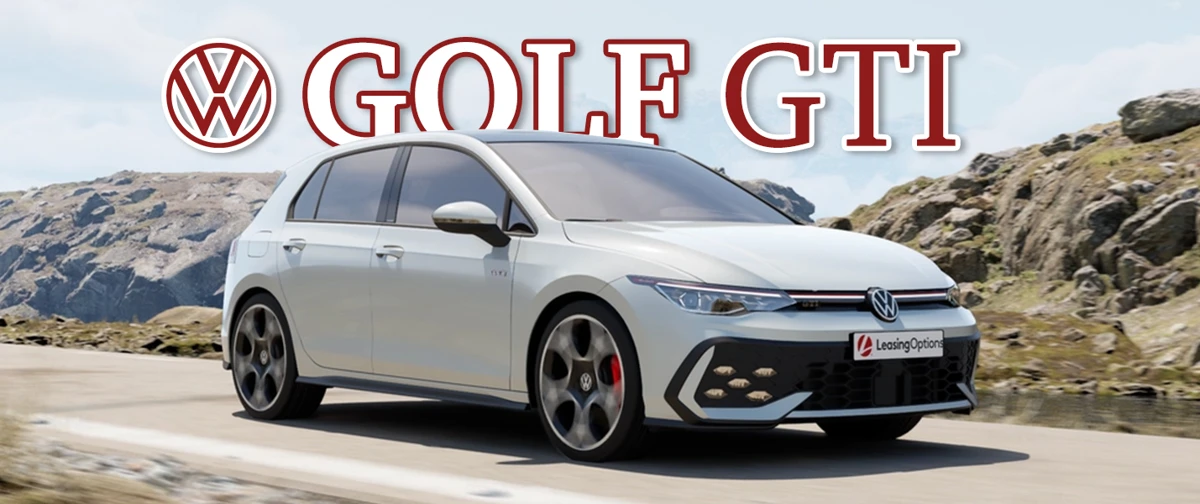
The current eighth-generation model remains true to the original formula. It uses a 2.0-litre turbocharged petrol engine, drives its front wheels and retains the five-door practicality that has kept the Golf relevant to generations of drivers.
The standard GTI now produces 265PS and is paired with a seven-speed DSG gearbox. The manual gearbox is no longer offered on the latest UK model, but the aim remains familiar.
For its 50th anniversary, Volkswagen has created the Golf GTI Edition 50, the most powerful production GTI so far.
Its 2.0-litre turbocharged engine produces 325PS and 420Nm of torque, allowing it to accelerate from 0 to 62mph in a claimed 5.3 seconds. Power is sent to the front wheels through a seven-speed DSG gearbox, while an electronically controlled differential lock helps the car manage that performance.
The Edition 50 sits 15mm lower than a conventional Golf and includes adaptive chassis control as standard.
It has also recorded the fastest Nürburgring Nordschleife lap achieved by a production Golf. Volkswagen development driver Benjamin Leuchter completed the 20.832km circuit in 7 minutes 46.13 seconds in April 2025, driving a car equipped with the Edition 50 Performance package.
The anniversary model includes many of the details expected from a special GTI.
Its sports seats use a new interpretation of the traditional chequered fabric, while red seat belts and a 50 Years GTI steering-wheel badge distinguish the cabin. The exterior gains anniversary branding, a black roof, black mirror housings and a side graphic that changes from black to Tornado Red.
There are plenty of references to the past, but the Edition 50 is not intended to recreate the original car. It demonstrates how far the GTI has progressed while retaining the thinking that made the first model so appealing.
The difference between the two cars is enormous. The original had 110PS and relied on its low weight and mechanical simplicity. The Edition 50 produces almost three times as much power and uses sophisticated electronics, adaptive suspension and a controlled front differential to manage it.
Yet both were created around the same central idea.
A GTI should be a car that an enthusiast looks forward to driving, but it should also work when the journey involves traffic, passengers, luggage or the weekly shop.
Volkswagen says more than 2.5 million GTI models have been produced worldwide since the original Golf GTI arrived in 1976. That success cannot be explained by performance figures alone.
The GTI has survived because Volkswagen understood that the best hot hatchbacks need to offer more than speed.
The motoring world around it is now changing again. Volkswagen has confirmed that the GTI badge will move into the electric era with the ID. Polo GTI.
That will be a major change for a name associated with petrol engines for five decades. However, the GTI has never been defined by one engine or a particular performance figure. Its identity comes from combining driving enjoyment with the usefulness of an everyday Volkswagen.
Whether an electric GTI can capture the same character will ultimately be decided from behind the wheel.
Fifty years after it first appeared, the Golf GTI is no longer simply a performance version of the Golf. It is an icon in its own right, a car that helped shape an entire category and continues to demonstrate why outright power is only one part of making a great driver’s car.
To discover the latest versions available, explore the current Volkswagen Golf lease deals from Leasing Options.


